NGage
The NGage was released in 2003 by Nokia as an alternative to the Gameboy Advance. It however was not successful as it followed the same design as the Nokia phone and whilst that worked well being used as a mobile phone, it did not work so well as a handheld gaming device. It was seen as being different because it was Nokia's entry into the game console development world, however it did not sell nearly as many as the Gameboy.

Sega Saturn
The Sega Saturn was released in 1995 by Sega. As successful as it was in Japan, it came second best to Sony's Playstation and later the Nintendo 64 in both Europe and America. One of the problems that arose was the fact that it ran on two CPU's which made it hard for most programmers to program software for.


Sega GameGear
Sega's GameGear was their answer to the Nintendo Gameboy and was released in 1991. It was an 8-bit handheld console with a unique library of games. However its flaws were the very low battery life, lock of original titles and low support from Sega later on into its life.

Atari Lynx
The Atari Lynx was a 16-bit handheld games console released in 1989. It was well known for being the very first handheld games console to use an LCD screen which meant that it could use colour in its games. However it was greatly outsold by the Nintendo Gameboy, this therefore meant that 3rd party developers dd not support it and it was later abandoned.

Gameboy Colour
The Gameboy Colour was released in 1998 which was an updated version of their earlier console, the Gameboy. As suggested by the name, it included a colour screen much like the Atari Lynx. It also featured backwards compatibility which was a first for Handheld gaming, something which the Gameboy series has been well known for.

Dreamcast
The Dreamcast was created by Sega in 1999 and was the last games console that Sega have released to date. It was seen as "Ahead of its time." due to the price of some of the production of some of the games. One of the games (Shenmue) was the dearest game to produce at the time. One of the features was a small screen on the controller. It was also the first console to allow games to be played online. However the release of the Playstation meant that it would be shortly lived and it burnt out Sega's game production entirely.

Playstation
Sony's Playstation was released in 1995. It was the first console to reach 100 million units to be shipped. It competed (And arguably outsold) the Sega Saturn and the Nintendo 64. It was originally going to be designed by Nintendo and Sony but Nintendo later went on to create another console whilst Sony stil worked on the Playstaion.

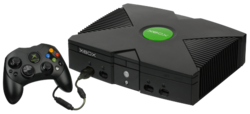
Xbox
Xbox was Microsoft's answer to the Playstation 2 in 2002. They launched Xbox Live with this console and that was the main reason for Microsoft's success. It also featured Halo, a first-person shooter which was seen at the time as one of the best games and actually fulled many consumers to pick it over the Playstation.
Gamecube
Nintendo's Gamecube was released in 2002 and was their answer to the Xbox and the Playstation.It was the first Nintendo console to use disks and it also supported connections to the Gameboy Advance. They also decided to use 2 handed controller instead of the Nintendo 64's 3 handed controller from feedback. This made it alot lighter and easier to hold.


Nintendo DS
The Nintendo DS was released in 2004 and was the next handheld from the Gameboy. It decided to use two screens instead of one and the second screen was a touch screen where you used a stylus to either figure out a puzzle or to move your character. Backwards compatibility was also popular due to the game on the Gameboy Advance being so popular.

Playstation Portable
The PSP was the handheld console that Sony released, it was out for sale in 2005. It was the first console to use Universal Media Disc (UMD) and was very successful. This was because of the similarities to the PS2 controller and the size of screen compared to the Nintendo DS.

Nintendo Wii
The Nintendo Wii sold hugely. This was because it was not just for hardcore gamers and it was released in 2006. The motion controller seemed very popular to a younger audience and also females. Because of this it was one of the most popular games consoles to date. It also released alot of accesories, one of these being the widely popular Wii Fit, a balance board.

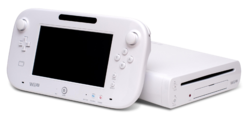
Nintendo Wii U
The Wii U was released in 2012 by Nintendo, however it is not seen as being very popular due to the lack of imagination from the Nintendo Wii. The console has kept the original properties of the Wii however it also accepts 1080p graphics, the original Wii does not however.